
A plain bed can make a bedroom feel unfinished, while an incorrectly sized or slippery runner creates clutter instead of polish. You will be able to choose the right width, place it securely, coordinate it with existing furnishings and judge whether the fabric suits Nagpur’s heat, dust and washing needs.
Key takeaways
- Place the runner across the lower third, extending evenly beyond both sides.
- Choose washable cotton or linen blends for heat, dust and frequent cleaning.
- Match one colour with the room, then use contrast for visual definition.
- Buy a runner sized for your bed and wide enough to stay in place.
The visual change: balance, contrast and a more finished bed
A runner adds no furniture, yet creates a horizontal band across the lower third of the bed. That band gives the eye a stopping point and makes the bed look deliberately arranged.
A contrasting colour turns the bed into the room’s focal point. A tonal runner, close in colour to the bedcover, adds depth through weave or texture without introducing another dominant colour. This is how a bed runner changes a bedroom in Nagpur without making a compact room feel crowded.
Leave a visible border of bedcover around the runner. The gap frames the band and shows that it was placed deliberately rather than thrown across the mattress. It also improves perceived neatness by defining the bed’s lower edge.
| Bed arrangement | Runner choice | Visual result |
|---|---|---|
| Plain bed | Textured runner | Adds surface interest without competing colour |
| Patterned bed | Quiet solid runner | Calms the pattern and preserves focus |
| Plain or patterned bed | Strong contrasting runner | Creates a clear focal point |
The runner cannot repair a mattress that is too small, a bed frame that overwhelms the room, or bedding with badly proportioned layers. Fix those proportions first; use the runner to finish the composition, not disguise it.
How to measure and place the runner on single, queen and king beds
Use the mattress, not the room, to set the runner’s position. For bed runner placement on bed in Nagpur, start with these proportions:
| Bed type | Starting runner width | Finished length and fit |
|---|---|---|
| Narrow single | 35–45 cm | Reach both mattress edges, with a slight overlap but no drop toward the floor |
| Queen | 45–60 cm | Reach or slightly overlap both mattress sides while leaving a visible bedcover border |
| King | 45–60 cm | Measure the actual mattress; reach both sides without covering the floor-facing edge |
Place the runner across the lower third for the safest everyday arrangement. Move it to the foot when the bed is neatly made and you want the sleeping area clear.
Centre it from mattress edge to mattress edge, then measure both side gaps. Equal gaps confirm that it is straight; align it with the mattress, not the walls. Leave a visible border of bedcover around it so the placement looks deliberate.
Check these practical points before settling it:
- Keep a tall footboard, storage lift and walking path unobstructed.
- Choose a textured underside if a thick duvet makes the runner slide.
- Use a narrower runner when the bedcover bunches at the edges.
- Lightly tuck both ends beneath the mattress to reduce movement.
- Do not use concealed pins where sleepers or upholstery could contact them.
Choosing fabric for Nagpur heat, dust, air-conditioning and washing
A lightweight washable cotton, linen-blend or matelassé runner suits Nagpur’s hot pre-monsoon weather better than a heavy quilted layer. In an air-conditioned bedroom, use it as decoration, not as a replacement for a breathable top sheet; polyester-heavy fabric can feel warmer and retain odour when washed infrequently.
| Option | Comfort and formality | Maintenance and practical checks |
|---|---|---|
| Cotton | Cool, relaxed, low to medium formality | Machine-washable; check shrinkage and colour-fastness |
| Linen-blend | Breathable, textured, casual-smart | Washable but prone to creasing; inspect stitched edges |
| Matelassé | Lightly padded, comfortable, polished | Washable if labelled; quilting reduces slipping |
| Polyester | Warmer, smooth, more formal | Easy care, but holds odour and may slide |
| Silk-like fabric | Cool to touch, distinctly formal | Snags and stains easily; often needs gentle care |
| Velvet or faux fur | Warm, luxurious, occasional use | Collects lint and dust; avoid as an everyday layer |
| Woven runner | Breathable texture, from casual to formal | Check loose threads and snagging |
| Quilted runner | Structured and decorative | Can feel heavy in heat; check wash temperature |
Dust from footwear, luggage, pets and children settles at the bed’s lower edge. For bed runner bedroom styling in Nagpur, choose removal and laundering over specialist-cleaning dependence.
Inspect the fabric weight, backing, edge stitching, lint, snag risk, stain visibility, shrinkage warning, colour-fastness instructions, wash temperature and whether the underside slides on bedding. Wash the runner before moving it between a bed, sofa or guest room.
Coordinating colours and patterns without turning the room into a set
For bed runner bedroom styling in Nagpur, connect the runner to one existing accent rather than matching every textile. Repeat a colour from curtain piping, a cushion, a rug border or upholstery, then vary the tone or texture across the rest.
| Surface | Useful connection | What to vary |
|---|---|---|
| Bedsheets and pillow covers | Echo one accent colour | Use a different tone or weave |
| Curtains or blinds | Repeat piping or a small motif | Choose a quiet runner if the window textile is patterned |
| Rugs and upholstery | Borrow a border or upholstery shade | Change pattern scale and texture |
| Wall colour | Pick a related undertone | Avoid an exact wall-colour match |
Patterned curtains or floor coverings usually pair better with a quiet solid runner. Pattern-on-pattern works only when the designs differ in scale and stay within a controlled palette; strong motifs repeated across several textiles make the room noisy.
A runner that is too wide hides the bedding border, while decorative pillows disappear against a bulky or busy design. An off-centre runner looks accidental unless cushions or another folded layer repeat that asymmetry.
Inspect colour-fastness guidance before placing vivid fabric in strong sunlight; dye can fade or shift. Rough embroidery, beads and exposed zippers can catch loosely woven upholstery, so use them carefully.
Using one runner beyond the bed: sofa, bench and guest-room applications
Treat a bed runner for sofa decor in Nagpur as an accent textile, not automatically as a throw. It works when its width and weight resemble a throw and it stays controlled.
1. Fold it lengthwise over the sofa back or one arm. Keep the ends above the floor so a long, slippery runner cannot become a trip or snag hazard.
2. Place it across the seat as a narrow accent. Centre it, smooth the folds, and keep tassels away from feet, hinges and other hardware.
3. Use it on a daybed, bench cushion or window seat. It can protect a bench from bags, cover a worn patch or add colour to a guest-room bed.
Check the upholstery first: rough embroidery, sequins, beads and exposed zippers can snag loose weaves. Damp dark or strongly dyed fabric can transfer colour, so place a washable plain cloth underneath embellished runners on delicate upholstery.
Useful bed runner home applications in Nagpur require laundering between the bed and seating. Dust, stains and contact residue should not travel between rooms.
A purchase checklist for a runner that will actually be used
Approve a runner only after four fit checks: it suits the mattress width, clears the footboard and storage mechanism, stays above the floor, and leaves a visible bedcover border.
- Read the care label for washing, shrinkage warnings, drying and colour-fastness instructions.
- Inspect edge stitching, backing and tassel attachment; reject loose threads, shedding lint and snag-prone trims.
- Check stain visibility, especially on pale or heavily textured fabric.
- Test it on the actual bedding and sofa before choosing a prominent pattern. A runner that works on a sample may compete with your curtains or upholstery at home.
| Reversible | Two usable colour sides for flexible coordination | Choose it when you change sheets or move the runner between rooms |
|---|---|---|
| Single-sided | One clearer decorative surface | Choose it when the pattern matters more than flexibility |
| Stitched edges | Better control through repeated washing | Choose it for a frequently used bedroom or guest room |
| Loose decorative finishes | More movement and detail, with greater snag and wash risk | Choose it for occasional styling only |
For bed runner home applications in Nagpur, compare fabric samples, dimensions and care instructions at Palak Furnishing Nagpur. Use those checks—not a complete matching set—as the decision basis.
Related product
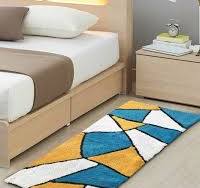 | BED RUNNER PALAK FURNISHING :- BED RUNNER IS A LONG PIECE OF CLOTH, DESIGNED TO DECORATE BEDS OR SOFAS. View product → |
Frequently asked questions
Where should you place a bed runner on a bed?
Lay it across the lower third of the bed, centred from side to side, with equal overhang on both edges.
How do you measure a bed runner for single, queen and king beds?
Measure the mattress width, then choose a runner that leaves a visible overhang on both sides without reaching the floor.
Which fabric is suitable for a bed runner in Nagpur?
Choose a breathable, washable fabric for heat and dust; use a tighter weave if the runner will face frequent handling.
Can a bed runner be used on a sofa or bench?
Yes. Fold or drape it over a sofa arm, seat back or bench to add colour and provide a washable decorative layer.
Keywords